Cumin (Cuminum cyminum), known as jeera or zeera, is one of India's most valuable seed spices. India is among the world's largest producers and consumers of cumin, and about 80% of the crop is used at home. Gujarat and Rajasthan together grow more than 95% of the country's cumin. The main jeera belts are Banaskantha and Mehsana in Gujarat, and Barmer, Jalore, Jodhpur and Nagaur in Rajasthan. Popular varieties include Gujarat Cumin-1 (GC-1), RZ-19, RZ-209, RS-1 and MC-43. The seed gets its flavour from a volatile oil (2.5–3.5%).
Cumin likes a moderately cool, dry climate and well-drained loamy soil rich in organic matter. It does not tolerate high humidity or heavy rain. That is exactly why early identification matters: a few cloudy, humid days at flowering can trigger Alternaria blight or powdery mildew, and once seeds shrivel the loss cannot be recovered. Aphids and thrips build up quickly on the soft growth, and wilt can wipe out patches of the field.
This guide follows the AESA-based integrated pest management (IPM) approach recommended by the National Institute of Plant Health Management (NIPHM): how to identify each problem, what favours it, how to manage it, and what to do at each crop stage.
Major insect pests of cumin
A note on sprays: The NIPHM cumin package does not recommend any chemical insecticide by name or dose. For insect pests it relies on cultural practices, traps, botanicals and natural enemies. If a pest still crosses safe levels and the pest-to-defender ratio is unfavourable, use only an insecticide registered for cumin, at the label dose, after advice from your local KVK or agriculture officer.
1. Aphids (Myzus persicae, Acyrthosiphon pisum, Aphis gossypii, Aphis craccivora)
Aphids are the most important insect pest of cumin across India.
Symptoms: Aphids pierce the plant and suck the sap from young, soft parts such as new leaves and shoots. Leaves do not open properly and stay small. Heavy infestation makes shoots wilt and dry out. Aphids also excrete a sugary honeydew on which black sooty mould grows, blocking sunlight from the leaves, and winged aphids carry viruses from plant to plant.
Identification: Small, soft-bodied insects in colonies on tender growth. Most are wingless females that produce young without mating; winged forms appear from time to time and fly off to start new colonies.
Monitoring: During weekly scouting, count nymphs and adults on five randomly selected leaves per plant, on five plants at each of five spots in the field. Set up yellow pan water traps or yellow sticky traps @ 4–5 per acre, 15 cm above the canopy. Empty tins painted yellow and coated with grease, Vaseline or castor oil also work.
Threshold monitoring: Using Fyllo Smart Sticky Traps, growers can track pest populations digitally and get alerts for the specific pest, with the spray chemical names, required quantity and schedule, when numbers cross the threshold, directly on their phone via the Fyllo App.
Cultural and mechanical control:
- Grow the aphid-tolerant variety MC-43 where it suits your area.
- Spray pressurised water on the crop to knock aphids off.
- Grow four rows of sorghum, maize or bajra around the field as a guard or barrier crop.
- Avoid excess nitrogen, which makes the crop soft and attractive to sucking pests.
Biological control:
- Spray fish oil rosin soap or neem seed kernel extract (NSKE 3%), neem oil (2%) or tobacco decoction (0.05%).
- Conserve the parasitoids Lysiphlebus, Diaeretiella, Aphelinus and Aphidius colemani, and predators such as ladybird beetles, lacewings, spiders and hover flies.
2. Thrips (Thrips tabaci)
Symptoms: Thrips feed on the undersides of leaves and on young shoots, sucking out the cell contents. Leaves curl downwards and turn a blackish-silver colour. Severe infestation makes young leaves wilt and dry out. Thrips can also spread viral diseases.
Identification: Adults are about 1.5 mm long, slender, yellow and brown, with two pairs of fringed wings. Females lay kidney-shaped eggs inside the leaf; they hatch in 5–10 days. Pale yellow, wingless larvae feed for 10–14 days and then rest in the soil as pre-pupa and pupa for 5–10 days. Adults live about a month.
Monitoring: Count nymphs and adults on five terminal leaves per plant (the tapping method also works). Set up blue pan water traps or blue sticky traps @ 4–5 per acre, 15 cm above the canopy. Fyllo Smart Sticky Traps can automate this count and show when catches are rising.
Control:
- Keep the field clean and remove weeds that host thrips.
- Spray fish oil rosin soap, NSKE (3%), neem oil (2%) or tobacco decoction (0.05%).
- Conserve the parasitoid Ceranisus menes and predators such as predatory thrips, minute pirate bugs, ladybird beetles, lacewings, mirid bugs and hover flies.
3. Tobacco caterpillar (Spodoptera litura)
A pest of regional importance in cumin.
Symptoms: Young caterpillars feed in groups and scrape the green tissue of the leaves, which turn papery white. Older caterpillars eat irregular holes and can skeletonise leaves down to the veins, causing heavy defoliation.
Identification: The full-grown caterpillar is 35–40 mm long, velvety black with yellowish-green stripes along the back and white bands on the sides. The moth is stout, with grey-brown forewings marked with wavy white lines. A female lays about 300 eggs in clusters covered with brown hairs. Moths fly at night.
Favourable conditions: Build-up is highest at 26–35°C, with relative humidity between 62 and 89%, no rain and long sunshine hours.
Control:
- Install pheromone traps for Spodoptera @ 4–5 per acre, more than 75 feet apart and one foot above the canopy. Change lures every 2–3 weeks, count moths weekly and destroy them after each count.
- Set up a light trap @ 1 per acre and run it from 6 pm to 10 pm, using a model with an exit for small natural enemies.
- Grow castor as a trap crop for egg laying.
- Collect and destroy egg masses and the gregarious young caterpillars; destroy them in kerosene-mixed water.
- Erect bird perches @ 20 per acre for king crows and mynahs.
4. Cutworm (Agrotis ipsilon)
Symptoms: Caterpillars hide in soil cracks by day and come out at night. They cut young plants at the base, pull them into the soil and eat them. Cut plants rarely recover. Damage is worst 25–35 days after planting.
Identification: The full-grown larva is 42–45 mm long, dark brown, plump and greasy. The moth is dark with grey patches and dark streaks on the forewings.
Favourable conditions: Persistent dry weather with little or no rain, low humidity and 16–23°C.
Control:
- Plough deeply in summer to expose larvae and pupae.
- Place small heaps of rice bran in the field in the late afternoon; collect and destroy the larvae that gather under them the next morning.
- Where possible, flood badly infested fields before planting.
Other pests
| Pest | Damage | Key management |
|---|---|---|
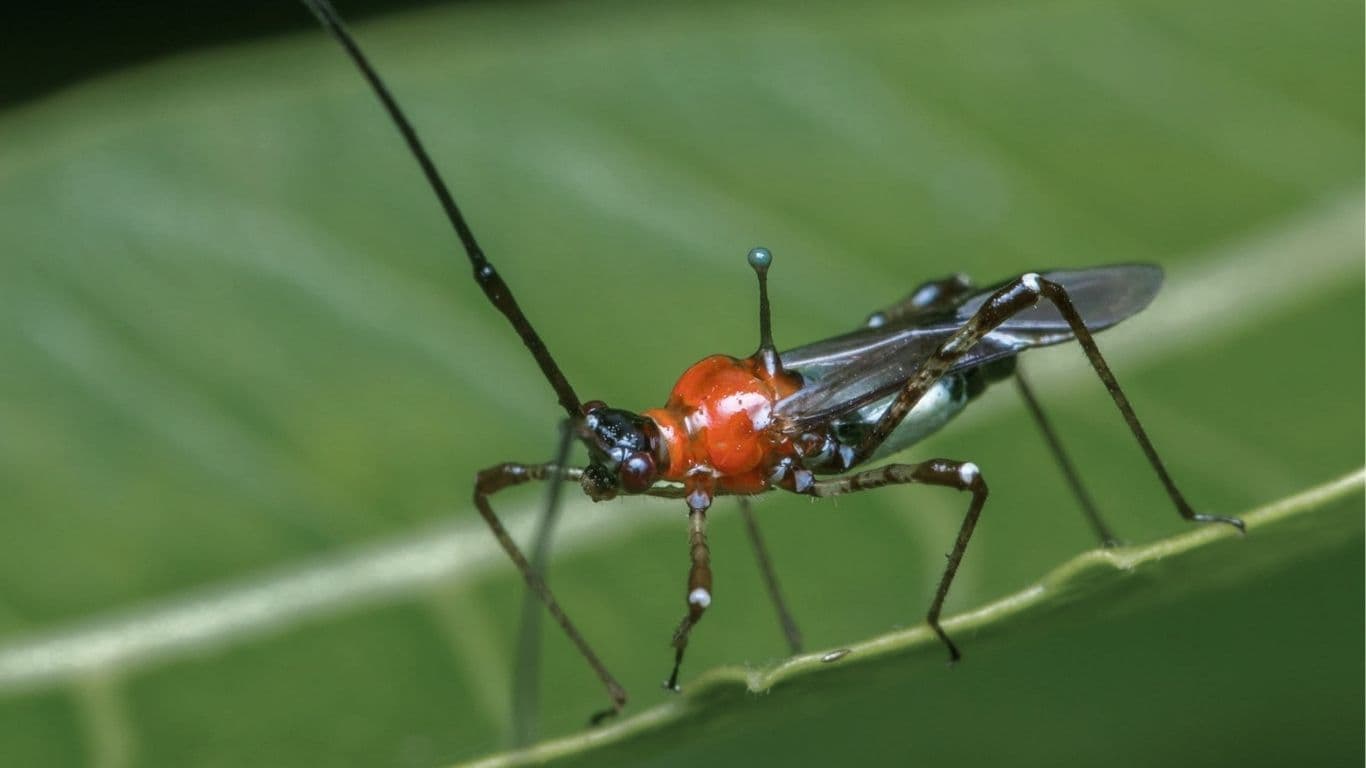
| Jassid (Eurymela fenestrata) | Sucks sap from leaves; regional pest | Yellow sticky traps @ 4–5 per acre; pressurised water spray; NSKE 3%, neem oil 2% or tobacco decoction 0.05% |
| Root-knot nematode (Meloidogyne spp.) | Galls on roots, stunted and weak plants; fastest at soil temperatures of 21–26°C | Deep summer ploughing; soil solarisation; neem, mustard or castor cake @ 8–10 quintals per acre |
| Cigarette beetle (Lasioderma serricorne) | Grubs bore into stored seed; small humpbacked brown beetles | Store in gunny bags with moisture-proof lining; pheromone traps with serricornin |
| Drugstore beetle (Stegobium paniceum) | Larvae tunnel through stored seed; best at about 30°C and 60–90% RH | Traps and lures with the sex pheromone stegobinone for monitoring |
Major diseases of cumin
1. Wilt (Fusarium oxysporum f. sp. cumini)
Wilt is one of the most damaging diseases of cumin in Gujarat and Rajasthan.
Symptoms: Plants wilt at the seedling stage and later in the season. When the stem is split lengthwise, the water-conducting tissue shows a brown discolouration.
Survival and spread: The fungus is both soil-borne and seed-borne and survives in crop debris as mycelium and resting spores. It spreads over short distances through irrigation water, rain splash, wind and field operations. After a plant dies the fungus colonises it and infects neighbouring plants.
Favourable conditions: Soil temperature between 12.5°C and 14°C.
Control:
- Grow tolerant varieties such as GC-1, RZ-19, RS-1, MC-43 and RZ-209.
- Use healthy, certified seed and treat it with Trichoderma viride or T. harzianum and Pseudomonas fluorescens; also apply them to the soil.
- Plough deeply in summer and solarise beds with 45-gauge polythene for three weeks before sowing.
- Apply neem, mustard or castor cake @ 8–10 quintals per acre.
- Follow crop rotation, avoid waterlogging, and collect and destroy wilted plants and crop debris.
NIPHM does not list a chemical for wilt.
2. Alternaria blight (Alternaria burnsii)
Symptoms: The disease appears in an epidemic form at flowering during warm, humid weather. Seeds fail to reach full size, shrivel and are blown away during winnowing. Early-sown crops are hit hardest and can give unmarketable seed.
Survival and spread: The fungus survives as dormant mycelium in diseased crop refuse and weeds, and possibly in the soil. Spores spread by air, splashing water, tools, clothing and workers.
Favourable conditions: Wet weather at 20–32°C with high humidity and cloudy skies.
Cultural control: Grow tolerant varieties (GC-1, RZ-19, RS-1, MC-43, RZ-209), avoid very early sowing, keep the field clean, destroy infected debris and avoid excess irrigation.
Chemical control (NIPHM options, choose one):
- Aureofungin 46.15% w/v SP @ 0.02% in 300 litres of water; second spray after 30 days.
- Copper oxychloride 50% WP @ 1.0 kg per acre in 300–400 litres of water.
- Difenoconazole 25% EC @ 0.05% in 200 litres of water; second spray after 15 days.
- Mancozeb 75% WP @ 0.6–0.8 kg per acre in 200 litres of water.
- Zineb 75% WP @ 0.6–0.8 kg per acre in 200 litres of water.
3. Powdery mildew (Erysiphe polygoni)
Symptoms: Usually appears at flowering in cloudy weather in February–March. White powdery growth starts on the leaves and spreads over the soft stems, branches and flowers. In severe cases seeds do not develop.
Survival and spread: Soil-borne and seed-borne. Secondary spread is by spores carried in wind and rain splash.
Favourable conditions: Cool, humid weather (20–25°C) or cloudy weather with relative humidity above 80%.
Cultural control: Grow tolerant varieties (GC-1, RZ-19, RS-1), use healthy seed, avoid dense sowing and excess nitrogen.
Chemical control (NIPHM options, choose one):
- Aureofungin 46.15% w/v SP @ 0.02% in 300 litres of water; second spray after 30 days.
- Difenoconazole 25% EC @ 0.05% in 200 litres of water; second spray after 15 days.
- Sulphur 40% WP @ 1.4 kg per acre in 400 litres of water.
- Sulphur 80% WG @ 0.75–1.0 kg per acre in 300–400 litres of water.
- Sulphur 85% DP (dust) @ 6–8 kg per acre.
NIPHM gives a 30-day harvest interval for aureofungin, and no pesticide should be applied in the 7 days before harvest.
4. Damping off (Pythium aphanidermatum)
Symptoms: Before emergence, seeds rot and seedlings die just below the soil surface. After emergence, a soft, water-soaked lesion forms at the collar, the stem narrows and the seedling topples over and rots.
Favourable conditions: High humidity, wet soil, high nitrogen, cloudy weather and temperatures below 24°C for a few days. Crowded seedlings and poorly drained soil make it worse.
Control: Prepare well-drained beds, avoid overwatering and dense sowing, solarise the soil, and treat seed and soil with Trichoderma and Pseudomonas fluorescens.
Nutrition notes
NIPHM does not list deficiency symptoms for cumin, but balanced nutrition is part of its IPM advice: too much nitrogen makes the crop succulent and prone to aphids, damping off and mildew, while too little slows growth.
| Input | NIPHM recommendation |
|---|---|
| FYM | 6–8 t per acre, worked into the soil 2–3 weeks before sowing |
| Oil cake | Neem, mustard or castor cake @ 8–10 quintals per acre (also helps against soil pests) |
| Nitrogen and phosphorus | 15 kg N and 15 kg P at sowing as basal dose, and another 15 kg N as top dressing about one month after germination |
| Zinc | Zinc sulphate @ 8 kg per acre in zinc-deficient areas |
| Biofertilisers and bio-agents | Mycorrhiza, PGPR, Trichoderma and Pseudomonas fluorescens |
The NIPHM package gives the N and P figures without a unit area in one place, and the vegetative-stage section gives the top dressing as 6 kg N per acre, which matches 15 kg per hectare. Base the exact dose on a soil test and local advice. Do not apply phosphate every season, as residual phosphate carries over.
Crop-stage-wise IPM calendar
| Crop stage | Main risks | Key actions |
|---|---|---|
| Pre-sowing | Wilt and damping off fungi, nematodes, resting insects, weeds | Deep summer ploughing; soil solarisation with 45-gauge polythene for three weeks; stale seedbed; FYM @ 6–8 t per acre; oil cake @ 8–10 quintals per acre; beds of 4 m x 3 m with irrigation channels; four rows of sorghum, maize or bajra as a guard crop; sow ecological engineering plants |
| Sowing | Wilt, damping off, seed-borne blight and mildew | Tolerant varieties; healthy, certified, weed-free seed; Trichoderma and Pseudomonas fluorescens seed and soil treatment; line sowing no deeper than 5–7 cm; basal N and P; zinc sulphate where needed |
| Vegetative | Aphids, jassids, thrips, cutworm, tobacco caterpillar, wilt, weeds | Weekly scouting; yellow and blue sticky traps @ 4–5 per acre; pheromone traps @ 4–5 per acre; light trap @ 1 per acre; bird perches @ 20 per acre; neem-based sprays; rice bran heaps for cutworm; weed-free for 20–40 days with hand weeding at 20 and 40 days; N top dressing at 30 days |
| Flowering and seed set | Alternaria blight, powdery mildew, aphids | Watch cloudy, humid spells closely; NIPHM fungicide options only when disease starts; continue trap monitoring; remove leftover weeds before they shed seed |
| Harvest and storage | Cigarette and drugstore beetles, moisture damage | Harvest when plants and stem bases dry; sun-dry on clean cemented floors; no pesticides in the 7 days before harvest; no colouring agents; moisture-proof bags stacked 50–60 cm from walls; pheromone traps; fumigation only by authorised persons |
Fyllo Smart Sticky Traps can replace manual counts of aphids, jassids and thrips on the yellow and blue traps through the vegetative and flowering stages, sending alerts when catches rise.
Natural enemies and conservation
Spray only when the pest-to-defender (P:D) ratio is unfavourable; NIPHM's general rule is 2:1. Key defenders in cumin are:
- Aphid enemies: the parasitoids Lysiphlebus, Diaeretiella, Aphelinus and Aphidius colemani, plus ladybird beetles, lacewings, spiders and hover flies.
- Thrips enemies: the parasitoid Ceranisus menes, predatory thrips, minute pirate bugs, ladybird beetles, lacewings, mirid bugs and hover flies.
- Caterpillar enemies: egg parasitoids Trichogramma, Tetrastichus and Telenomus; Chelonus, Bracon, Campoletis, Ichneumon and Carcelia; and predators such as lacewings, spiders, red ants, dragonflies, robber flies, reduviid bugs, praying mantis and king crows (black drongo).
Ecological engineering: Grow flowering plants on borders and internal bunds, with shorter plants towards the crop and taller ones on the edge. NIPHM lists carrot, buckwheat, sweet clover, caraway, sunflower, French bean, dill, parsley, cosmos, coriander, marigold, mustard, anise and spearmint as attractant plants, cowpea as an intercrop, sorghum and maize as border plants, and Ocimum, spearmint, onion and bajra as repellent plants. Leave naturally growing nectar plants such as Tridax, Ageratum and Alternanthera. Add organic matter, reduce tillage, rotate with legumes, and avoid broad-spectrum pesticides when the P:D ratio is favourable. Do not apply chemicals within seven days of releasing parasitoids.
For the latest variety and product advice for your area, contact the nearest KVK, state agricultural university or ICAR institute.
Fyllo Smart Sticky Traps and the Fyllo App
In cumin, the flying pests that sticky traps catch are aphids, jassids and thrips, and NIPHM recommends yellow traps for aphids and jassids and blue traps for thrips @ 4–5 per acre. Counting tiny insects on many traps every week takes time, and it is easy to miss the start of a build-up.
Fyllo Smart Sticky Traps do this counting for you. The trap photographs what it catches, AI identifies and counts the pests, and the numbers appear in the Fyllo App. When counts cross the threshold, you get an alert on your phone, along with the recommended chemical, dose and timing.
The Fyllo App also keeps your scouting notes, weather, crop-stage advisories and spray history in one place. This is useful in cumin, where a few humid, cloudy days at flowering can set off blight and powdery mildew.
The traps and the app support your decisions; they don't replace field inspection, pheromone traps for caterpillar moths, correct disease identification or label instructions. Learn more about Fyllo Smart Sticky Traps.
Key takeaways
- Start with tolerant varieties such as GC-1, RZ-19, RS-1, MC-43 and RZ-209, and healthy seed treated with Trichoderma and Pseudomonas.
- Solarise the soil and plough deeply in summer to reduce wilt, damping off and nematodes.
- Scout weekly and use yellow and blue sticky traps @ 4–5 per acre for aphids, jassids and thrips; manage them first with water sprays and neem-based products.
- Watch the weather at flowering: cloudy, humid spells bring Alternaria blight and powdery mildew, so act at the first symptoms with an NIPHM-listed fungicide.
- Dry seed well, keep it away from damp, use no colouring agents and protect storage from beetles with pheromone traps.
Conclusion
Healthy cumin comes from a system, not a single spray: tolerant varieties, treated seed, summer ploughing and solarisation, balanced nutrition, careful irrigation, weekly scouting with sticky, pheromone and light traps, protection of natural enemies, and timely fungicide action when humid weather arrives at flowering. Together they keep aphids, wilt, blight and mildew below damaging levels and protect seed quality for market and export.
Turn this guide into a plan for your own field: map your plots, scout weekly, record trap and disease observations, and act early while a problem is still small.
Pesticide registrations change over time, so check every product against its current label and local recommendations. Consult your local KVK or state agricultural university before applying pesticides or fertilisers, and always follow the label dose and safety instructions.