What Is This Study About?
This study identifies 10 districts across India that are climatically and geographically suited for tomato cultivation during the April–July summer window — the period when tomato supply drops sharply and retail prices spike. By matching climate data (temperature, humidity, rainfall) with soil suitability, the study offers a data-backed roadmap for stabilising India's summer tomato supply chain.
Key Takeaways
- Tomato retail prices have historically surged to ₹100/kg in June–July due to heat-driven supply shortages — despite India producing ~200,000 metric tonnes annually.
- 10 districts across Maharashtra, Gujarat, Bihar, UP, Punjab, Rajasthan, and Odisha have been identified as climatically viable for summer tomato cultivation.
- Expanding cultivation in these regions can stabilise prices for consumers, improve farmer incomes during peak demand, and create employment in post-harvest and supply chain operations.
The Tomato Price Problem in India
Despite India being one of the largest tomato producers globally, the country faces recurring price crises during summer months. Historical data shows that prices surge particularly in June and July — in June 2022, retail prices reached up to ₹100 per kilogram, straining household budgets and creating inflation pressure for the government.
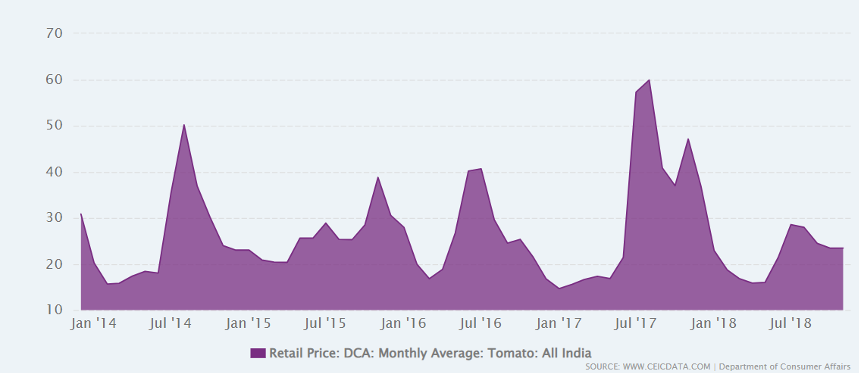
The root cause is straightforward: supply drops when it's needed most.
Why Do Tomato Prices Spike in Summer?
The major contributors to summer price hikes are climatic factors. High temperatures in May and June, combined with heavy or erratic rainfall, directly impact tomato yields. Temperatures above 32°C impair fruit set and development, while excess humidity promotes disease. These conditions disrupt both production and the supply chain, creating an acute shortage precisely when consumer demand remains steady.
Identifying the Best Districts for Summer Tomato Cultivation
To address this gap, a comprehensive climate and soil analysis was conducted to identify districts suitable for tomato cultivation from April to July. Ten districts were identified based on favourable conditions:
The 10 Recommended Districts
Maharashtra: Ahilyanagar, Chh. Sambhaji nagar
Gujarat: Amreli, Panch Mahals
Bihar: Bhojpur
Uttar Pradesh: Chandauli
Punjab: Firozpur, Hoshiarpur
Rajasthan: Hanumangarh
Odisha: Jharsuguda
These districts were selected because they maintain manageable temperature ranges, low-to-medium rainfall, and moderate humidity during the critical April–July growth window.
Ideal Climate and Soil Conditions for Summer Tomatoes
Tomato plants thrive in temperatures ranging from 21–24°C, though they can tolerate higher ranges with proper management. Temperatures consistently above 32°C negatively impact fruit development, while frost and very high humidity are equally detrimental. Low-to-medium rainfall is optimal for growth.
The selected districts exhibit an average temperature range of 27–33°C during the critical growth period, with humidity between 35–65% and low-to-medium rainfall — conditions that, while warm, remain within the workable range for tomato cultivation when supported by precise irrigation and microclimate management.
Benefits of Expanding Summer Tomato Cultivation
Price Stabilisation for Consumers A steady supply from these districts during June–July directly counters the supply shortage that drives price spikes, benefiting millions of households across India.
Higher Returns for Farmers Peak-demand periods mean premium prices. Farmers in these districts stand to earn significantly more per kilogram during the summer window compared to the regular season when supply is abundant and prices are low.
Employment Generation Expanding tomato cultivation in new regions creates downstream employment in post-harvest handling, sorting, packaging, cold chain logistics, and transportation.
Enhanced Regional Food Security Local production in these districts reduces dependence on long-distance supply chains, improving food availability and freshness for regional consumers.
Challenges to Address
Realising this potential requires targeted support. Infrastructure for post-harvest handling and cold chain logistics needs development in these districts. Government policies — including subsidies for drip irrigation, mulching, and protected cultivation technologies — are essential to de-risk adoption for farmers. Additionally, real-time climate monitoring through IoT devices can help farmers in these regions manage the narrow margin between viable and stressful growing conditions during summer.
Conclusion
Tomato cultivation is vital to India's agricultural economy, but recurring summer supply shortages undermine both farmer livelihoods and consumer affordability. Identifying and developing climatically suitable districts for April–July cultivation is a practical, data-backed approach to solving this problem.
Government incentives, infrastructure investment, and precision agriculture tools — working together — can turn these 10 districts into reliable summer tomato hubs. Similar climate-suitability studies can be replicated for other high-demand crops, providing actionable guidance for policymakers and farmers alike.


