Key Takeaways
- Act before the leaves curl. Visible symptoms — mottling, warped and necrotic leaves, curling, dried new growth — only appear after heavy feeding. By then you are managing an active infestation, not preventing one.
- The life cycle is fast: 15–18 days. A single female lays around 150 eggs, so a small, unnoticed population can build into a full infestation within weeks.
- Blue is the tell. Black Thrips is strongly attracted to blue, which makes blue sticky traps the most reliable early-detection tool — and the blue traps in a Fyllo Smart Sticky Trap pack pair with app-based counting and threshold alerts.
- Monitoring, not a cure. Sticky traps signal when thrips cross the action threshold so control lands on time. They are not a standalone control method.
- Break the cycle at the soil. Nymphs pupate in soil and leaf litter — mulching and residue removal cut the next generation before it re-emerges.
What Is Black Thrips (Thrips parvispinus)?
India produces close to 36% of the world's chilli, and Indian farmers have long kept pests in check through Integrated Pest Management (IPM). But a relatively new invader — Thrips parvispinus (Karny), commonly called Black Thrips — has recently caused serious losses across Andhra Pradesh, Telangana, and Karnataka. Unlike the more familiar thrips species, this one multiplies fast and can do significant damage before farmers even notice anything is wrong.
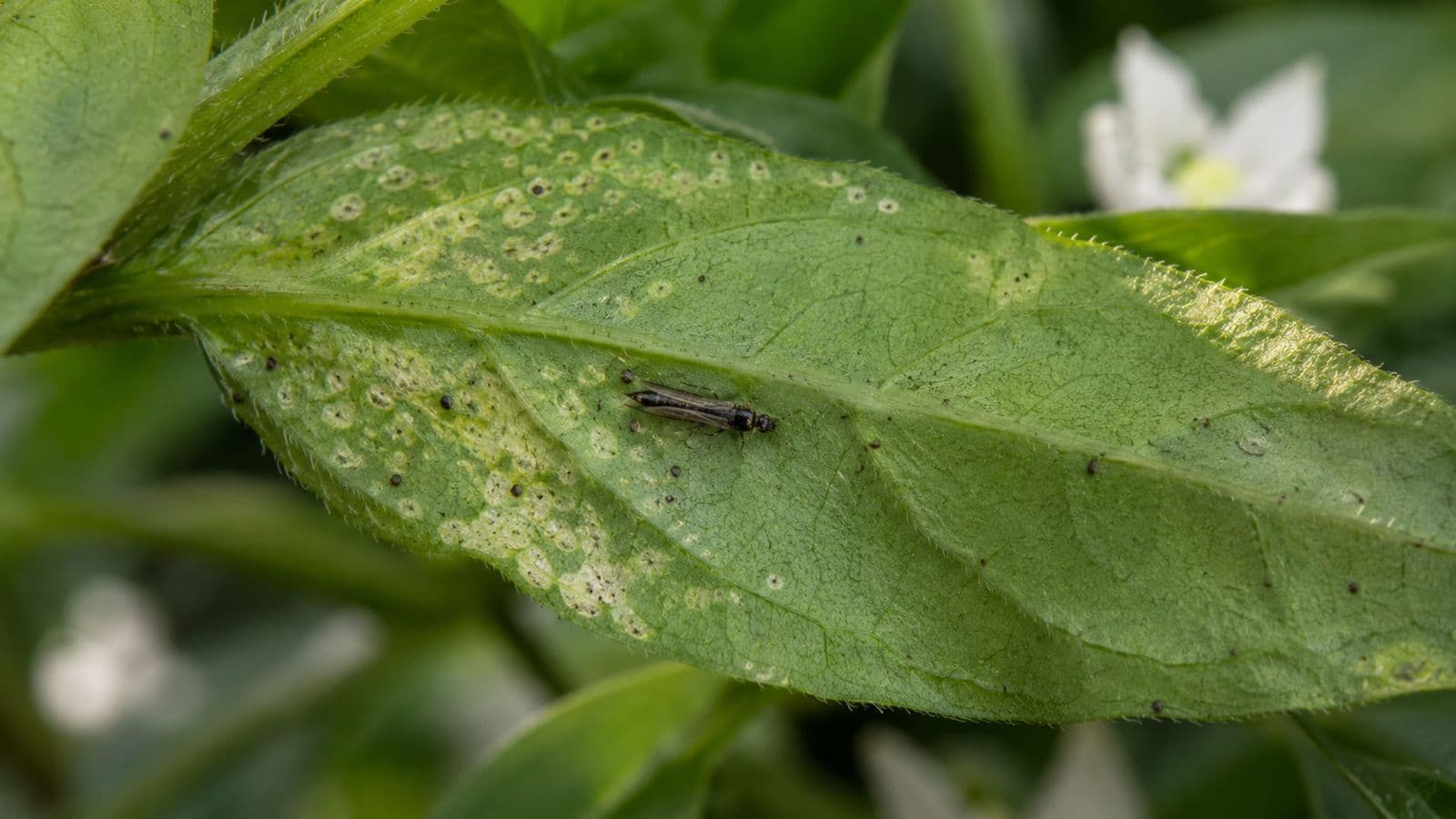
Females are roughly 1mm long, with a black abdomen, yellowish-brown mid and hind thorax, brown head, and forewings that are dark with a pale base. Males are smaller at about 0.6mm and uniformly golden. Black Thrips is also polyphagous — it feeds on coffee, papaya, bell pepper, potato, tobacco, green beans, strawberries, shallots, watermelon, and cucurbits, among others. That means it can survive on nearby host plants even when chilli isn't in season, keeping a constant foothold in the area.
Why Does Black Thrips Spread So Fast in Chilli?
The pest's biology explains why early detection matters so much. A single female lays around 150 eggs directly into leaf tissue over her lifetime. Eggs hatch in just 4–5 days, and larvae begin feeding on leaves and flowers almost immediately. After two moults over the next 4–5 days and a short 2–3 day pupal stage, the whole life cycle wraps up in only 15–18 days.
Adult females live about 9 days, males around 6. This short generation time is the core problem: a handful of thrips you didn't notice can become a full-blown infestation within weeks — well before any visible leaf curling sets in. Combined with its wide host range, Black Thrips can keep re-seeding the crop from surrounding vegetation season after season.
Why Can't You Wait for Leaf Curl to Confirm It?
The symptoms most farmers associate with thrips — yellow mottling, reddish-brown discoloration, warped and necrotic leaves, curling, and dried new growth — all appear after significant feeding damage has already happened. On flowers, by that stage, thrips have already scratched petals into brown streaks, dried out pollen, and disrupted pollination, cutting directly into fruit set.
Waiting for these signs means you are reacting to an established outbreak, not heading one off. The goal is to catch the pest while it is still just a few individuals on a trap.
How Do You Detect Black Thrips Early?
Two approaches work best together.
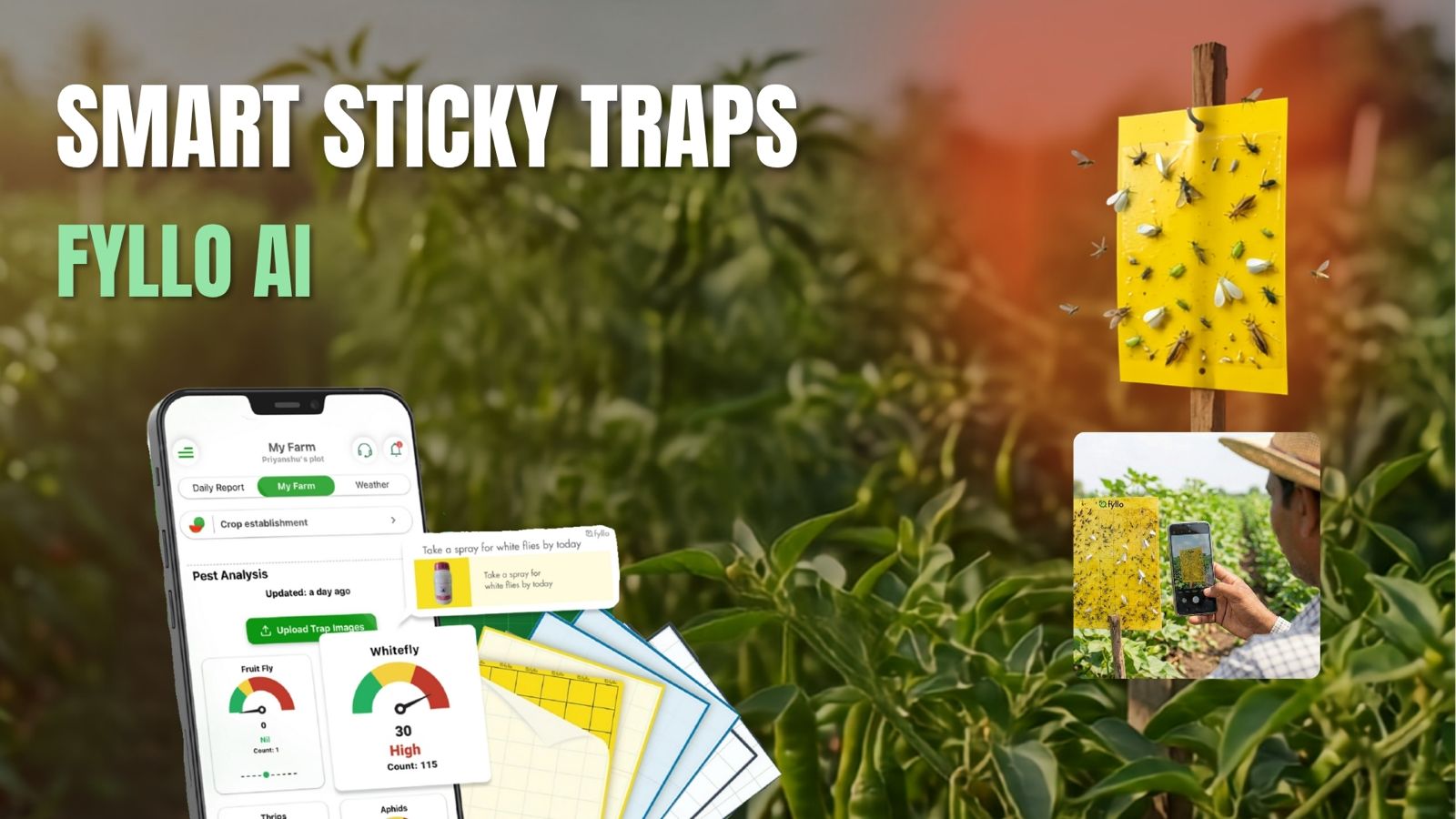
Monitor with Smart Sticky Traps. Thrips, including Black Thrips, are strongly drawn to blue, which is why the blue traps in a Fyllo Smart Sticky Trap pack are one of the most reliable early-detection tools for this pest. Each UPASI-certified trap measures 15 × 20 cm, and the pack pairs blue traps with yellow ones for whitefly, aphids, and jassids, so a single deployment covers the common chilli pest complex. Installed around the field perimeter, the blue traps intercept thrips as they move in from surrounding host plants — often before they reach the main crop.
Plant border crops. A ring of maize or cowpea around the chilli field creates a second early-warning layer. These border crops tend to show initial thrips damage before the main crop does, giving you a clear signal to act. As a bonus, they also support natural predators and parasitoids that help keep thrips numbers down.
> Field insight: Read the trend, not a single reading. What matters is whether the count on your traps is rising check-to-check — that slope is your early warning. Some growers add white sticky traps as a supplementary catch to cross-check the blue-trap signal.
How Do Smart Sticky Traps Turn Detection Into a Decision?
What makes the traps "smart" is what happens after a thrips lands. Instead of squinting at a crowded trap and guessing, you photograph it through the Fyllo app, which identifies and counts the thrips for you and tracks the trend over successive checks. As numbers approach the Economic Threshold Level — the point at which the population is about to cause real damage — the app alerts you and issues a spray advisory. That turns a passive trap into a genuine early-warning system: you act on a rising count, not on a curled leaf.
It's worth being clear about what a trap does and doesn't do. Sticky traps are a monitoring and mass-trapping tool, not a standalone cure. In an outbreak their job is to tell you when thrips are building up and when the threshold is crossed, so your control measures land at the right time rather than after the crop is already hit. Used that way, they are one of the most valuable pieces of an IPM programme.
How Do You Break the Thrips Life Cycle at the Pupal Stage?
Beyond detection, one cultural practice reduces the number of thrips that reach adulthood in the first place. Since mature nymphs drop to the soil or leaf litter to pupate, disrupting that habitat cuts into the population before it can re-emerge and reinfest the crop. Simple practices like plastic-sheet mulching and clearing away crop residue remove or block access to these pupation sites, preventing a share of the population from ever completing its life cycle.
Can You Manage Black Thrips on a Small Chilli Plot?
Yes — a timing-based approach beats calendar spraying and needs fewer inputs.
1. Install blue Smart Sticky Traps around the field perimeter as soon as the crop establishes, so incoming thrips hit the traps before the main crop.
2. Check the traps at fixed intervals and log the counts. The Fyllo app does this automatically from a single photo.
3. Plant a maize or cowpea border as a second early-warning layer and a refuge for natural enemies.
4. Watch the trend, not one reading — a steadily rising count is your signal to prepare.
5. When the app flags the Economic Threshold Level, follow the spray advisory. Time control to the threshold rather than to the calendar.
6. Mulch and clear crop residue to disrupt pupation and cut the next generation.
7. Conserve natural predators and parasitoids wherever you can — they suppress thrips between interventions.


